Daegu Hyanggyo
 6.87℃ 5.06℃ 42%
Ruins.Academy
112, Myeongnyun-ro
Jung-gu, Daegu, TG 41962, South Korea
Approx. 10-minute walk from Myeongdeok Station (Subway Line 1 & 3) or Gyeongdae Hospital Station (Subway Line 2)
+82-53-422-8700
Daily 09:00–18:00 (Hours may vary depending on internal events and ceremonies)
Open year-round (Specific buildings may be restricted during ancestral rites)
historic site
landmark
hot place
experience program
lecture
183
AI provides it.
Overview
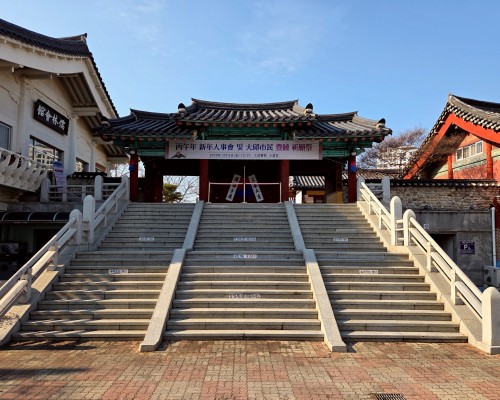
Daegu Hyanggyo is a traditional Confucian school established during the Joseon Dynasty. It served as the central public education institution for the Daegu area, focusing on teaching the Confucian classics and performing ancestral rites for ancient sages. Today, it remains a serene cultural sanctuary in the middle of the city, preserving the spiritual heritage and traditional etiquette of Korea.
History
Originally founded in 1398 during the reign of King Taejo, the school was first located near the Daegu Gwangyeok-si City Hall. It was destroyed during the Imjin War (1592) and underwent several relocations and reconstructions before being moved to its current location in 1932. The complex consists of Daeseongjeon (the shrine) and Myeongnyundang (the lecture hall), following the traditional "Jeonmyo-hukhak" layout (shrine in front, school in back).
Things to see
Confucian architectural heritage and artifacts:
The **Daeseongjeon Hall**: A sacred shrine housing the spirit tablets of Confucius and other prominent Confucian scholars.
The **Myeongnyundang Lecture Hall**: The main classroom where students gathered to study the core principles of Confucianism.
The **Seokjeon-daeje Memorial Stones**: Historical markers and structures used during the grand biannual ancestral ceremonies.
Things to do
Traditional experiences and cultural programs:
Witness a **Traditional Wedding**: Daegu Hyanggyo is a popular venue for authentic Korean wedding ceremonies, often held on weekends.
Participate in **Etiquette Classes**: The school offers various programs for youth and adults to learn traditional greeting manners, tea ceremonies, and calligraphy.
Attend the **Seokjeon-daeje**: A major ancestral rite performed in spring and autumn (February and August of the lunar calendar) featuring traditional music and dance.
Places nearby
 Marcostar 2026
0 results found